- Podcast
・ August 18, 2026
Episode 14 – Why Hiring in Japan Requires a Different Playbook, with Darren McKellin
The best sales candidates in Japan are not on LinkedIn. They are not sending resumes and they are not waiting for a recruiter to call. They are thriving exactly where they already are, and for most foreign companies trying to hire in Japan, that single fact is the whole problem.
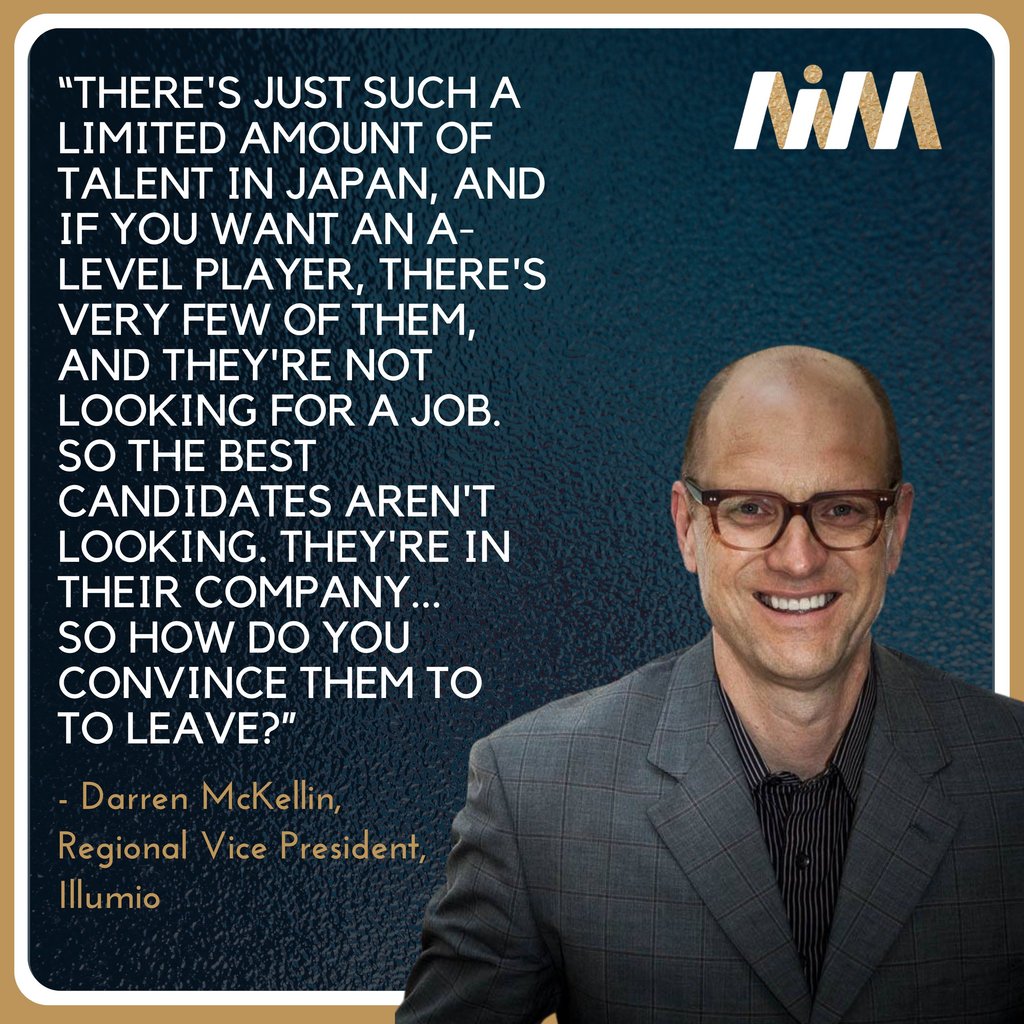
“There’s just such a limited amount of talent in Japan and if you want an A-level player, there are very few of them and they’re not looking for a job.”
— Darren McKcllin, President of Ingenium Group
In Episode 14 of the Asia AIM Podcast, host Robert Heldt speaks with Darren McKellin, who has spent more than 30 years building elite sales teams in Japan for companies including Oracle NetSuite, Verizon, Zscaler and Vodafone Japan. Originally from Chicago, Darren recently authored Gaishi de Katsu, a Japanese-language guide for professionals who want to join and thrive inside foreign-affiliated companies.
In this conversation, he breaks down why hiring tactics used in Western markets often fall short in Japan, what actually motivates Japanese salespeople and why a fun, team-first culture is a genuine competitive advantage, not a soft strategy.
Why are Japan’s best sales players never actively looking for work?
Japan’s genuine A-level players are a small, tightly held group who are already valued and well compensated, so they are not browsing job boards or refreshing LinkedIn.
Companies that build their hiring funnel around inbound applications risk missing some of the strongest talent in the market.
Finding the right person requires a different kind of recruiting, one built on relationships and reputation rather than postings and outreach volume. It means knowing who the strongest candidates are before they start looking, not waiting for them to raise their hand.
What are the biggest friction points foreign companies hit in Japan?
Darren points to several recurring challenges.
First, there is the legal weight of a bad hire. Japanese labor law strongly protects employees, so removing a poor performer can be difficult and come with legal risk. A hiring mistake in Japan can therefore become far more costly than companies accustomed to other markets might expect.
Second, foreign companies routinely prioritize English fluency over sales capability. That can mean passing over candidates whose mid-level conversational English comes with an exceptional hunter mentality and strong market relationships.
Then there is the sheer scale of the talent shortage. Recruiters in Japan can command fees of 30 to 35 percent compared with roughly 10 to 15 percent in other markets. For companies used to different recruiting economics, that gap shows just how competitive the Japanese hiring market has become.
How does a performance-based culture work inside Japan’s seniority system?
Many traditional Japanese companies still rely heavily on seniority-based promotion systems, giving foreign companies an opportunity to offer something different.
A merit-based, performance-driven culture can be particularly attractive to younger professionals and women who may face fewer opportunities for advancement under traditional structures.
The trade-off headquarters needs to understand is timing. Japanese clients tend to be conservative buyers who scale contracts incrementally after testing, so deals can take longer to mature than global leadership may initially expect.
Companies entering Japan need to balance realistic expectations about sales timelines with a workplace culture that rewards strong performance. Patience may be required at the corporate level, but foreign companies can have a meaningful advantage in attracting talent when they offer opportunities based on performance rather than seniority.
Why don’t standard referral bonuses work in Japan?
Employee referral programs are a common recruiting tool in many markets, but Darren points to a specific cultural challenge in Japan.
Employees may hesitate to introduce a friend because they worry about what will happen if that person is rejected. A failed introduction could create awkwardness or damage the friendship, so the financial reward may not be enough to outweigh the social risk.
Darren also highlights employer branding through new hire interviews and hiring events. Giving prospective candidates a chance to see the people and culture behind the company can build familiarity and make the organization more attractive to talent that is not actively looking for a new role.
What do foreign companies need to rethink about executive search in Japan?
Japan’s limited bilingual talent pool, passive candidate market and competitive recruiting environment mean companies need to be deliberate about what they are looking for and realistic about how difficult that person may be to find.
The strongest candidate may not be the person actively applying for the position.
For sales roles in particular, companies need to look beyond language fluency and understand a candidate’s track record, market relationships and ability to win business. Applying the same recruitment process used elsewhere can mean overlooking some of the qualities that matter most in the Japanese market.
Where is Japan’s tech hiring market heading?
Darren also points to a broader shift taking place across technology recruitment.
Major technology companies have slowed external hiring in some areas, leaving some departed roles unfilled or turning to AI and automation. At the same time, startups and smaller companies remain hungry for fresh talent.
This is changing where opportunities are emerging. Rather than automatically gravitating toward the biggest corporate name, strong candidates may find greater opportunities with smaller, high-growth businesses.
It is also part of the thinking behind Darren’s new book, Gaishi de Katsu, which offers practical advice for professionals who want to find opportunities, navigate cultural differences and take greater ownership of their careers inside foreign-affiliated companies.
FAQ
Because many of them are not looking. The strongest performers are already thriving in roles where they are valued and well compensated, so job boards and inbound applications often miss them. Finding them takes a more proactive, relationship-driven approach.
Japanese labor law strongly protects employees, making it difficult to remove a poor performer without potential legal risk. A hiring mistake can therefore become a longer and more costly commitment.
Employees may fear that referring a friend who gets rejected could damage the friendship. That social risk can outweigh the financial incentive most referral programs rely on.
Not at the expense of sales capability. Companies that focus too heavily on English fluency can miss candidates with mid-level conversational English who bring strong sales instincts and valuable market relationships.
A merit-based, performance-driven environment can give employees opportunities to advance based on results rather than seniority. A positive, team-first culture can also help attract and retain strong talent.
Listen to the full episode
To hear all of Darren McKellin’s insights on hiring A-level players, building a performance-driven culture and leading sales teams in Japan, listen to the full episode of the Asia AIM Podcast with host Robert Heldt.