- Blog
・ June 11, 2026
Understanding Japan’s Energy Transition: A Guide for New Entrants
Japan is one of the world’s biggest energy consumers. It runs on electricity around the clock, powers some of the world’s most energy-intensive manufacturing and has almost no domestic oil or gas of its own. That dependence on imported fossil fuels has always been a vulnerability. And after the 2011 Fukushima nuclear disaster forced the country to shut down most of its nuclear plants overnight, Japan suddenly needed even more imported energy to keep the lights on.
That’s the backdrop for what is now one of the most ambitious clean energy transitions in the world. Japan has committed to carbon neutrality by 2050, set a national target for renewable energy to power 36–38% of the country by 2030 (roughly double its current share), and launched a government investment program called GX, short for Green Transformation, that aims to unlock 150 trillion yen (around USD 1 trillion) in clean energy investment over ten years.
For international energy companies and sustainability investors, the opportunity looks obvious. But Japan’s energy market has a way of humbling outside entrants who arrive without understanding how it actually works. Here is what you need to know.
What Is Driving Japan’s Energy Transition — and Who Is in Charge?
When you hear ‘Japan energy policy,’ two things are driving the agenda right now.
The first is the 7th Strategic Energy Plan (published February 2025). Think of this as Japan’s long-range energy blueprint, a government document that sets the targets every power company, grid operator and investor plans around. The latest version sets a goal of 40–50% renewable energy by 2040, and it makes a significant policy shift: where the previous plan said Japan should reduce its reliance on nuclear power, this one says Japan should maximize nuclear’s use alongside renewables.
The second is the GX Promotion Act (passed in 2023). Think of GX like a national renovation fund. The government commits roughly 20 trillion yen (about USD 130 billion) in public financing, issued as the world’s first sovereign ‘transition bonds’, to encourage private companies to invest alongside it. The goal is to catalyze more than 150 trillion yen in total public-private investment over ten years.
Regulatory oversight sits with METI’s Agency for Natural Resources and Energy (ANRE), the body that handles energy business registration, renewable energy certification and auction rules. Building a working understanding of how it operates is not optional for market entry.
Where Are the Real Investment Opportunities in Renewable Energy Japan?
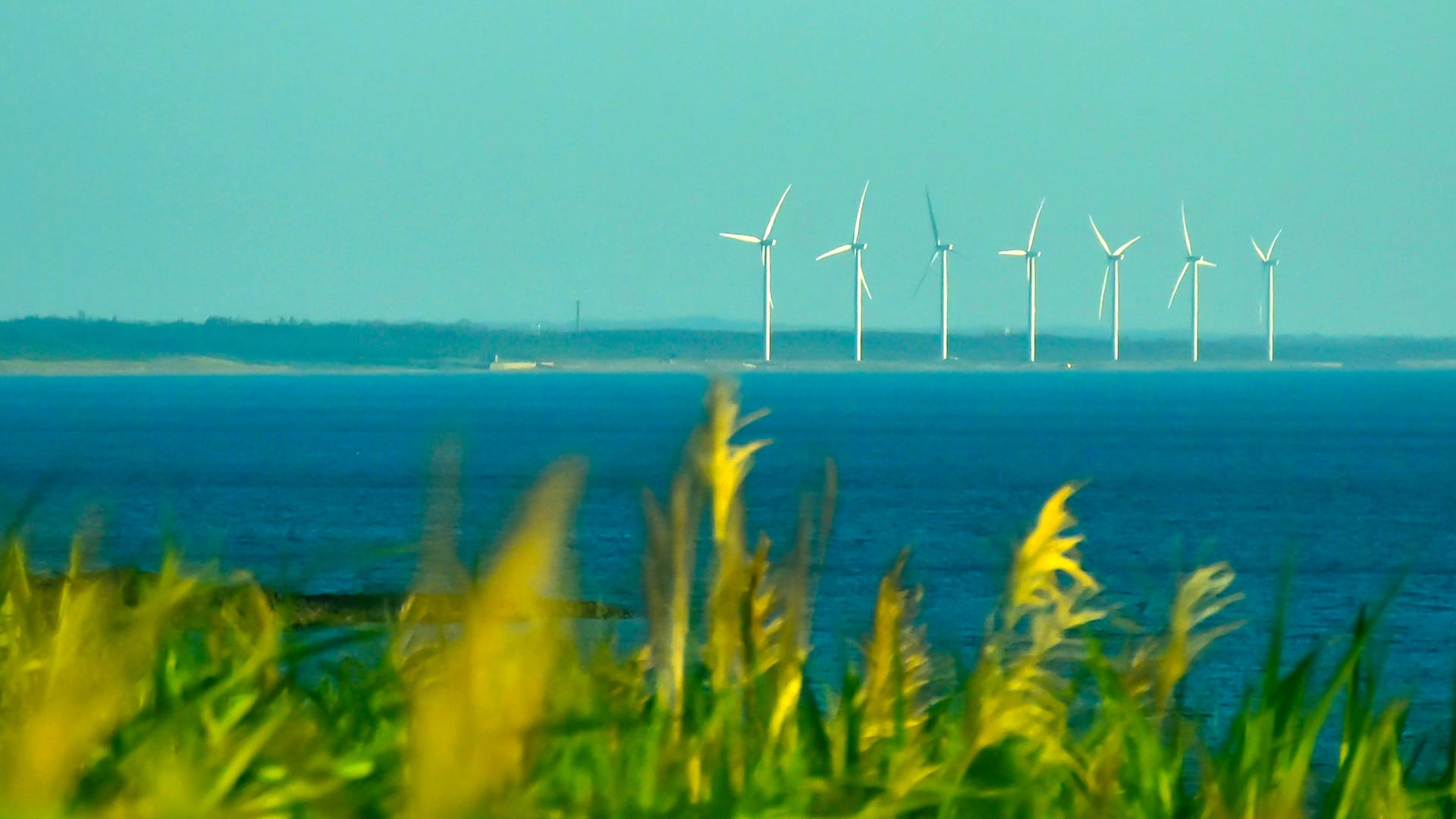
The biggest single opportunity in renewable energy Japan right now is offshore wind. Here is what that means in plain terms: Japan is surrounded by ocean, and ocean winds are strong and consistent. Building wind turbines offshore, on platforms in the sea, lets Japan generate large amounts of clean electricity without using its limited land. According to JETRO, the government has set a target of 10 GW of offshore wind capacity by 2030 and 30–45 GW by 2040. To put that in perspective: 10 GW is roughly enough to power around 10 million average Japanese homes.
In 2024, Japan also changed its laws to allow offshore wind development in its Exclusive Economic Zone (EEZ) — the stretch of ocean extending up to 370 kilometers from its coastline. According to the Japan Wind Power Association, this opens up roughly 3.5 times more ocean area for development than was previously available. The third auction round (December 2024) allocated approximately 1.07 GW across two projects.
Beyond offshore wind, three other areas are attracting serious capital:
- Green hydrogen and ammonia. Hydrogen is a fuel that produces no carbon when burned. Japan passed the Hydrogen Society Promotion Act in October 2024, which introduced government subsidies to encourage companies to supply low-carbon hydrogen. Japan also wants to mix ammonia (a hydrogen-based fuel) into its existing coal power plants by 2030 to reduce their emissions — which creates demand for companies that can supply it.
- Battery storage and grid upgrades. Japan’s electricity grid needs significant investment to handle the surge in renewable energy. Batteries store excess solar or wind power and release it when the sun isn’t shining or the wind isn’t blowing. The GX framework includes specific funding for cross-regional transmission upgrades through OCCTO (the Organisation for Cross-regional Coordination of Transmission Operators). This is an underserved segment with growing government support.
- Carbon capture and storage (CCS). A 2024 law created a formal licensing framework for CCS, technology that captures carbon dioxide emissions from industrial sources and stores them underground instead of releasing them into the atmosphere. This is a nascent segment in Japan, but now has a clear regulatory path.
One practical thing to understand before modeling any project: Japan has moved away from its old Feed-in Tariff (FIT) system, where the government guaranteed a fixed price for every unit of clean energy produced, to a Feed-in Premium (FIP) system. Under FIP, you sell your electricity at whatever the market price is, and the government tops up the difference between that price and a benchmark price set in a competitive auction. It is a more market-exposed model, and it means cost control matters more than it did under the old guaranteed-price regime. According to IEEFA’s December 2025 analysis, average construction costs for offshore wind in Japan rose around 20% between 2020 and 2024, and several early projects ran significantly over budget. Going in with accurate cost assumptions is not optional.
Why Do So Many Western Companies Struggle to Enter This Market?
The barriers are rarely technical. They are mostly about time, relationships and culture, and they catch out experienced international investors more often than you would expect. As Chambers and Partners’ 2025 Japan Renewable Energy guide notes, regulatory navigation and local partnership structure are consistently the decisive factors in project success.
Start with timelines. An offshore wind project in Japan will not move from planning to construction in 18 months. It involves a four-stage environmental assessment process, each stage requiring public comment periods, agency reviews and sign-off from local governments and affected communities. From start to construction, the full development timeline is typically 5–7 years. Companies that plan their capital deployment around Western timelines routinely run into trouble.
Then there is how decisions actually get made. In Japan, there is a concept called nemawashi, which roughly translates as ‘going around the roots.’ Before any major decision is formally made, all the relevant stakeholders need to have been consulted, heard, and brought along. This is not bureaucratic friction, it is how complex multi-party projects gain the trust and buy-in needed to actually get built. Arriving with a technically excellent proposal but no existing relationships in the utility sector or government is a bit like showing up to a job interview without any references.
The good news is that Japan’s legal framework explicitly allows foreign companies to participate, through Japanese subsidiaries or special-purpose companies set up with local partners. The model is well-established. BP entered the market through a partnership with Marubeni Corporation. RWE bid in the third offshore wind auction alongside Mitsui & Co. and Osaka Gas. These structures work because they combine international technical and financial capability with the domestic relationships and regulatory knowledge that make projects move.
The risk is not that Japan is closed to outsiders. The risk is arriving without a plan for how you will build trust, and losing years of runway as a result.
FAQs
Yes. Foreign companies can participate by setting up a Japanese legal entity, either a local subsidiary or a special-purpose company formed with Japanese partners. Japan’s government auction process explicitly welcomes international investors, and global energy companies including BP, RWE and Orsted have already entered the market successfully.
For offshore wind projects in designated development zones, the full cycle from environmental assessment to construction start typically takes 5–7 years. Smaller solar and battery storage projects move faster, but all projects need certification from METI and grid connection approval from OCCTO and regional transmission operators.
GX stands for Green Transformation. It is the Japanese government’s plan to accelerate the shift away from fossil fuels. Think of it as a matched-funding program: the government issues roughly 20 trillion yen in bonds to kick-start investment, with the goal of attracting over 150 trillion yen in total public and private capital over ten years. For energy companies, it is the main source of government incentives, infrastructure funding, and subsidy support for clean energy projects. You can read about the framework on the METI GX policy page.
Conclusion: The Entry Window Is Open, But It Won’t Wait
Japan’s clean energy transition is not a future scenario. It is funded, legislated, and already underway. The investment is real, the government targets are binding, and the infrastructure gaps are significant. The companies that will shape this market over the next twenty years are entering it now.
But entering Japan’s energy market without understanding its timeline realities, its relationship culture and its regulatory structure is a fast way to lose years of momentum. Japan’s energy sector is looking for long-term partners, companies that understand the market deeply enough to stay.
Contact AIM B2B to discuss how we help international companies build the partner networks, government relations strategy and go-to-market infrastructure to enter Japan’s energy market with confidence.
Share
Author

Category
- Clean Energy
- Strategy
Share
Latest Articles
-

-

- Podcast
・ September 17, 2026
Episode 15 – What isn’t Said: Reading the Room in Japanese Business, with Maria Shimura
-