- Blog
・ June 25, 2026
Japan wasn’t behind. B2B buyers just caught up
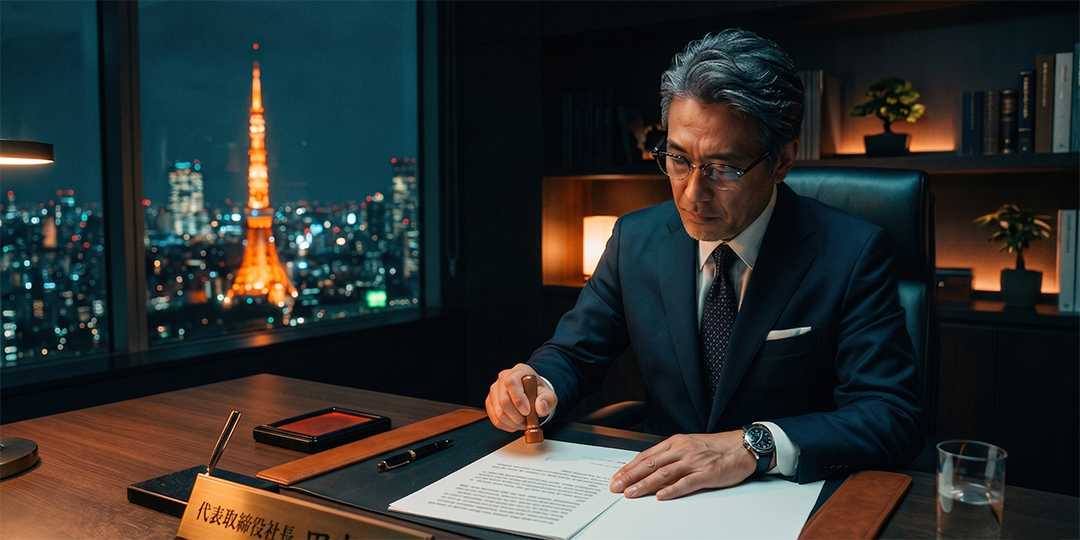
For two decades, foreign B2B marketers have treated Japan as a difficult market. Slow buying cycles. Anonymous research. Vendor-skeptical buyers. Decisions made by committee long before sales got involved. The 2025 buyer research suggests we had it backwards the whole time. Japan was not lagging behind. It was the leading indicator.
The Western ABM playbook was built around a buyer who would respond to outbound: name an account, find the buying group, multi-thread, layer intent data on the CRM, accelerate. Japanese B2B never worked that way, and foreign CMOs spent twenty years assuming the problem was Japan. Then the global buyer changed. The Japan playbook is now the playbook everyone needs.
The data has finally caught up
6sense’s 2025 Buyer Experience Report, surveying nearly 4,000 global B2B buyers, found that 94% of buying groups now rank their shortlist in order of preference before they ever speak to a vendor. The vendor ranked first wins about 80% of the time. On day one of the journey, 95% of buyers already have the eventual winner on their shortlist. Buyers initiate 79% of seller conversations, and the average buyer has been through eight to nine prior purchase journeys in the same category. They are not blank slates being persuaded. They are experienced operators validating a decision they have already made.
Forrester’s January 2026 research sharpens this further: 94% of B2B buyers now use AI in their buying process, and twice as many buyers name generative AI or conversational search as more meaningful than any other information source. That includes vendor websites, product experts and sales. According to Forrester’s principal analyst John Buten, marketers must now shift from driving traffic to driving visibility, moving from SEO to answer engine optimization. Gartner’s 2025 sales survey found that 61% of B2B buyers prefer an outright rep-free buying experience, and 73% actively avoid suppliers that send irrelevant outreach.
In APAC, the pattern is sharper still. The Green Hat and 6sense APAC B2B Buyer Journey Report 2025, surveying 632 organizations across Singapore, Hong Kong, Australia, New Zealand and Southeast Asia, found buying groups average 11 people, 60% of the journey is complete before vendor contact, 85% of buyers have requirements mostly finalized before talking to anyone, and 76% say the first vendor they contact wins the business. Read those numbers next to any honest description of how Japanese enterprises buy. They are the same buyer.
What this changes
The implications for the standard ABM stack are brutal. If buyers decide before vendor contact, then platforms designed to detect anonymous in-market signals and route them to SDRs are optimizing at the wrong moment. The selection phase is where the deal is won or lost, and most of it now happens inside answer engines, peer networks and private channels your CRM cannot see. If the first vendor a buyer reaches out to wins 80% of the time, the question is not how to accelerate the deal once it appears in your pipeline. The question is how to become the preferred vendor before the buyer enters the pipeline at all.
This is what serious B2B marketing in Japan has done for years. Not because anyone planned it that way, but because Japanese buyers gave you no alternative. ‘Nemawashi,’ the consensus-building that precedes any formal evaluation, was always the real sales process. Foreign marketers called it slow. It was just early.
The Japan playbook is now global
The marketing motion that works in Japan maps directly on to what the 2025 data says wins globally. Build preference before contact, not pipeline after it. Treat third-party trust signals as primary, not supplementary: peer recommendations rank above analyst coverage and vendor narratives at every stage of a software purchase, according to G2’s 2024 buyer research. Invest in roundtables, executive briefings, peer-led trade media programs and Japanese-language content designed to be forwarded to the rest of the buying group, because that is where consensus is being built. Optimize for answer engines, not just search engines, because that is where the buyer is now researching you. And measure success by shortlist placement and share of search, not by raw lead counts.
If that reads like a description of how a competent agency marketing in Japan has been running ABM programs for the last decade, that is the point.
The harder question
For twenty years, foreign B2B firms treated Japan as the market that needed fixing. The 2025 and 2026 buyer data flips that. The harder question now is whether global CMOs are willing to invert the relationship and treat Japan as a model rather than an exception. The companies that win in the next five years will be the ones whose global marketing function looks more like a Japan team than the other way around.
Contact AIM B2B for expert ABM strategy, stakeholder trust, and deep local market insight.
This piece was first published on The Drum.
Share
Author

Category
- Strategy
- Account-Based Marketing