- Blog
・ December 2, 2025
Beyond the Blue Links: Mastering the Era of Generative Engine Optimization (GEO)
The search landscape is undergoing its most significant shift in decades. As buyers increasingly bypass traditional search engines in favor of Large Language Models (LLMs) such as ChatGPT, Gemini and Perplexity for trusted answers, businesses must adapt or risk invisibility.
In our recent webinar, The Master GEO Strategy, our COO Sam Bird and Content Strategy Director Ignacio Davalos unpacked the evolution from traditional Search Engine Optimization (SEO) to Generative Engine Optimization (GEO), sharing actionable strategies to help B2B brands in Japan and beyond secure their place in the future of search.
How is Search Shifting from Keywords to Conversations?
Sam opened the session by highlighting a critical change in user behavior: buyers are moving from simple keyword searches to in-depth, conversational queries.
- SEO focuses on ranking lists of links using keywords and backlinks
- GEO focuses on influencing the synthesized answers provided by AI, requiring content that is conversational, fact-rich and conceptually connected
The data supports this shift. ChatGPT now boasts 800 million weekly users and Gemini has 550 million. In Japan, while adoption is slower than in the US, usage is rising, particularly among marketing and information-gathering professionals.
What Are the Common Myths About GEO?
To clarify the GEO landscape, the team tackled common misconceptions:
Myth: Ranking #1 on Google ensures success in AI answers.
Reality: This is false. AI models prioritize the “best” answer, not necessarily the highest-ranking link. Semrush data shows that nearly 90% of ChatGPT citations come from search results ranked 21st or lower.
Myth: You must create entirely new content for GEO.
Reality: Existing quality content is a goldmine. It simply needs to be restructured and optimized for AI readability.
Myth: Small businesses cannot compete.
Reality: GEO levels the playing field. Niche expertise often outperforms broad domain authority in AI answers.
How Can B2B Brands Optimize for AI Search?
Ignacio Davalos outlined a practical framework for implementing GEO, emphasizing that it should be treated as a continuous improvement process (Kaizen) rather than a one-time project.
1. What Is the “Answer First” Approach?
AI models prefer content that is direct and easy to parse.
- Conversational Mode: Optimize content to reply directly to prompts using a natural tone.
- Semantic Signals: Use phrases such as “In summary,” clear bullet points, and H1/H2/H3 headings structured as questions to guide the AI.
- Direct Answers: Place the core answer at the beginning of the section to increase the likelihood of being featured.
2. How Do Technical Trustworthiness and Schema Build Confidence?
For robots to trust your content, they must understand it.
- Schema Markup: We recommend implementing specific schema types such as “Article,” “FAQ Page” and “How To” to help AI models interpret your entities and relationships.
- E-E-A-T: Expertise, Experience, Authoritativeness and Trustworthiness remain crucial. Cite authoritative data and expert sources to validate your content.
3. How Does Regional Nuance Impact GEO in Japan?
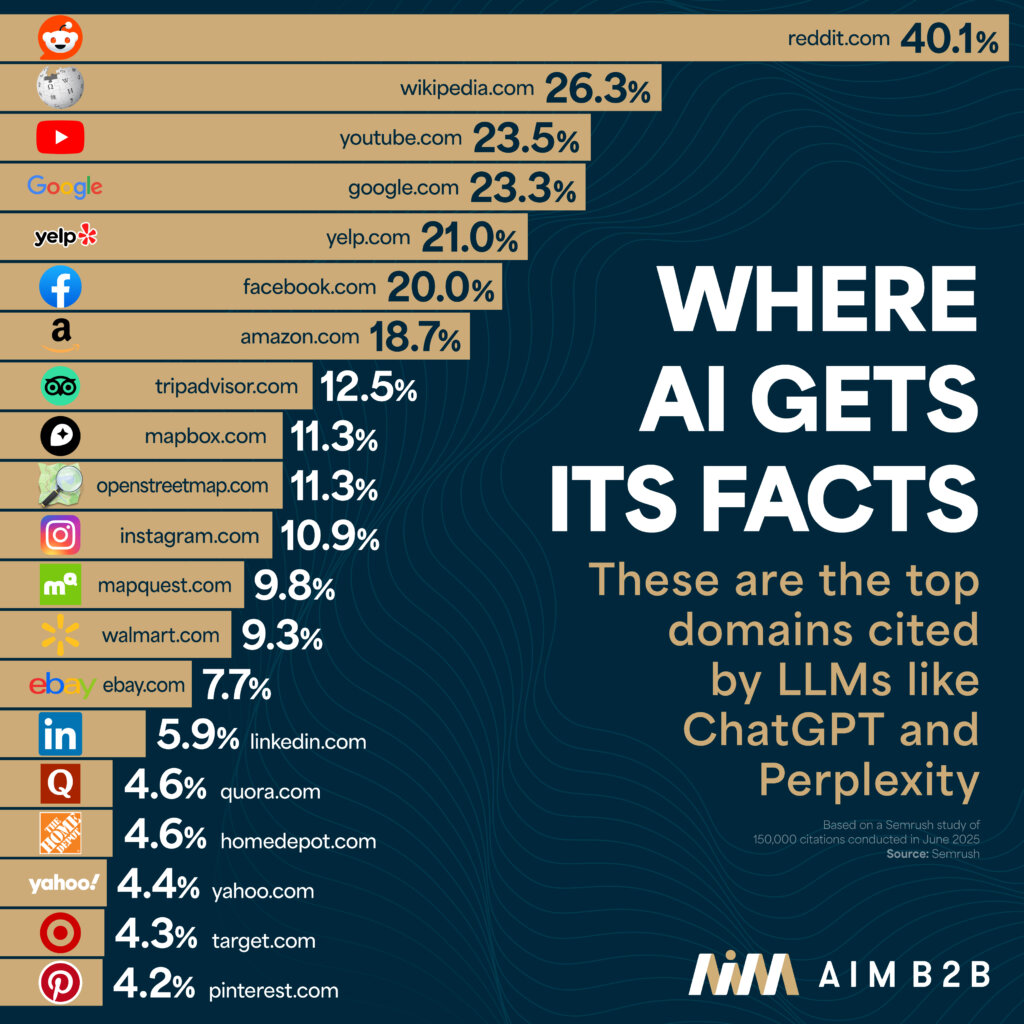
While platforms such as Reddit are vital for GEO in the US, the landscape differs in Japan. Ignacio advised focusing on local Q&A forums such as Yahoo! Chiebukuro. These platforms help the “GEO robot” learn natural Japanese question patterns and context, which are essential for surfacing in local AI queries.
4. Why Is Kaizen Essential for GEO Maintenance?
GEO is about freshness. Ignacio suggested a quarterly plan to fix and update the top five to 10 revenue-generating pages. This involves checking “freshness metrics”—such as the percentage of key pages updated in the last 90 days—to ensure your brand remains the clearest, most current answer.
How Should You Measure GEO Success?
Success in GEO looks different than traditional SEO. While traffic volume might initially dip as users get “zero-click” answers, the quality of leads often increases because these users are better informed. To track performance, the team recommended tools such as HubSpot’s free AEO grader and Ahrefs Brand Radar.
Comprehensive Q&A with the Experts
During the session, Sam and Ignacio addressed specific questions regarding global nuances, measurement, and tactical implementation.
Global vs. Local Nuances
Does ChatGPT crawl information in Japan or globally? ChatGPT (and most LLM-based “answer engines”) pull from global training data and global retrieval sources, but what shows up to a user is influenced by user location and language, as well as local/regional authority signals. So yes, it crawls and learns globally, but Japanese-language and Japan-relevant sources have a strong advantage when the prompt is in Japanese or the user is in Japan.
What happens if our website has multiple language selections? It can be included, but only if the Japanese version is clearly discoverable and high quality. Key requirements include:
- Proper Hreflang: Use hreflang=”ja-JP” pointing to the correct Japanese URL.
- Indexable URLs: Avoid language pages hidden behind scripts, parameters or forced geo-redirects.
- Japanese Context: Use Japanese product/industry terms, examples and citations from Japanese sources.
Are SEO, GEO, and AEO results different in Japanese and English? Yes, performance differs a lot by language. Japanese results depend heavily on Japanese sources. LLMs often treat Japanese and English corpora like separate ecosystems.
Do you have an office in the US? At the moment we don’t have an office in the US, as our current focus is on expanding our offices and presence across the APAC market.
Strategy & Content Planning
Does it make more sense to plan content based on Reddit view volumes, or still Google search volume? You need both, but they answer different planning needs:
- Google Search Volume: Demand that already exists (great for SEO + GEO baseline).
- Reddit/Community Engagement: Emerging demand + real phrasing + pain points (gold for GEO).
Search terms were limited but AI context search is vast. How do we research this? Classic keyword lists are too narrow. For GEO, you want Prompt-Cluster Research.
- How to do it: Turn keywords into question families.
- Example using “CRM automation”: Prompt families could be “How does CRM automation work in B2B SaaS?” “CRM automation vs marketing automation” or “Best CRM automation for small sales teams.”
Regarding refreshing content, should we go back and refresh it, optimizing for GEO? Yes, updating old content is one of the highest ROI GEO plays.
Most recommendations are best practice already. How is AI visibility different from SEO? You’re right that the foundation overlaps. The difference is what we optimize for: SEO optimizes for rankings, while GEO optimizes for being used in answers. Key GEO-specific differences:
- Answerability: Clear, extractable answers up top.
- Entity Clarity: Who you are, what you do, what category you lead.
- Citation Fitness: Stats, definitions, frameworks, step-by-steps LLMs can quote.
- Prompt Diversity: Cover full intent space, not just high-volume keywords.
- Multi-source Corroboration: LLMs favor claims repeated across trustworthy sites.
Since Google is still important, should we run SEO & GEO in tandem currently? Yes, 100%. Right now GEO depends on SEO health because strong SEO = strong crawlability, authority and freshness.
ChatGPT handles 66M search-like prompts daily vs 14B Google queries. Should we still do SEO? Yes, practice SEO because Google remains the biggest discovery engine for first-time buyers.
Measurement & Analytics
How are you measuring or getting prompt volumes such as keyword volume? There is no perfect “prompt volume tool” yet, so we triangulate:
- Google PAA (People also asked) + autosuggest: Proxy for question demand.
- Community question frequency: Proxy for emerging prompts.
- Search Console long-tail queries: Real user phrasing already reaching you.
How can I measure my current AEO/GEO health? Is there a standard tool? There isn’t one universal, standard AEO/GEO health-check tool yet, but you can still run a reliable audit using a clear scorecard approach focused on: visibility testing, crawlability, answer module quality, entity strength, authority corroboration and freshness.
Are your clients seeing a drop in leads but better quality lead enquiries? Totally, that’s a common pattern during GEO shifts. You may get fewer visitors overall, but they’re better informed and tend to convert later in the funnel.
Your data of AI usage is for companies. Individual usage should be higher right? Directionally yes: internal/enterprise adoption stats usually understate total usage because many people use LLM tools personally. We can’t give a precise multiplier without your exact dataset, but in most B2B categories, individual usage is several times higher than formal enterprise reporting.
Conclusion
As Sam Bird noted, the traditional era of SEO is effectively “over,” but the opportunity to manage brand reputation through AI is just beginning. By maintaining high-quality content fundamentals while adapting structure for AI readability, B2B brands can turn this disruption into a competitive advantage.
Next Step for Your Brand: Contact AIM B2B today to discuss your strategy for 2026.
Share
Author

Category
- Strategy
- Branding
- Content & Creative