- Podcast
・ April 21, 2026
Episode 10 – B2B Buyer Journey Reset: How AI Is Driving the Silent Shortlist, with Halel Porat
Most B2B marketing teams are still designing buyer journeys that buyers no longer follow. The research is happening elsewhere, the shortlist is forming in silence and by the time a buyer lands on your website, they are already 60% to 80% of the way through their decision.
“Every time you get an answer from ChatGPT, it is coming from somewhere. It’s coming from your data. Therefore, you need to take care of everything you are publishing.”
— Halel Porat, CEO of TrenDemon
In Episode 10 of the Asia AIM Podcast, host Robert Heldt speaks with Halel Porat, COO of Trendemon, a platform that works with more than 200 major B2B websites worldwide. Halel explains why the buyer journey has gone agentic, what generative engine optimization means for content strategy and why the future of B2B websites is not a brochure but an answer engine.
What does it mean for the B2B buyer journey to go agentic?
An agentic website is not static. Where traditional websites reacted to clicks and filters, an agentic website understands what a visitor is trying to accomplish and actively helps them get there. The same shift is now happening across the entire B2B buying process.
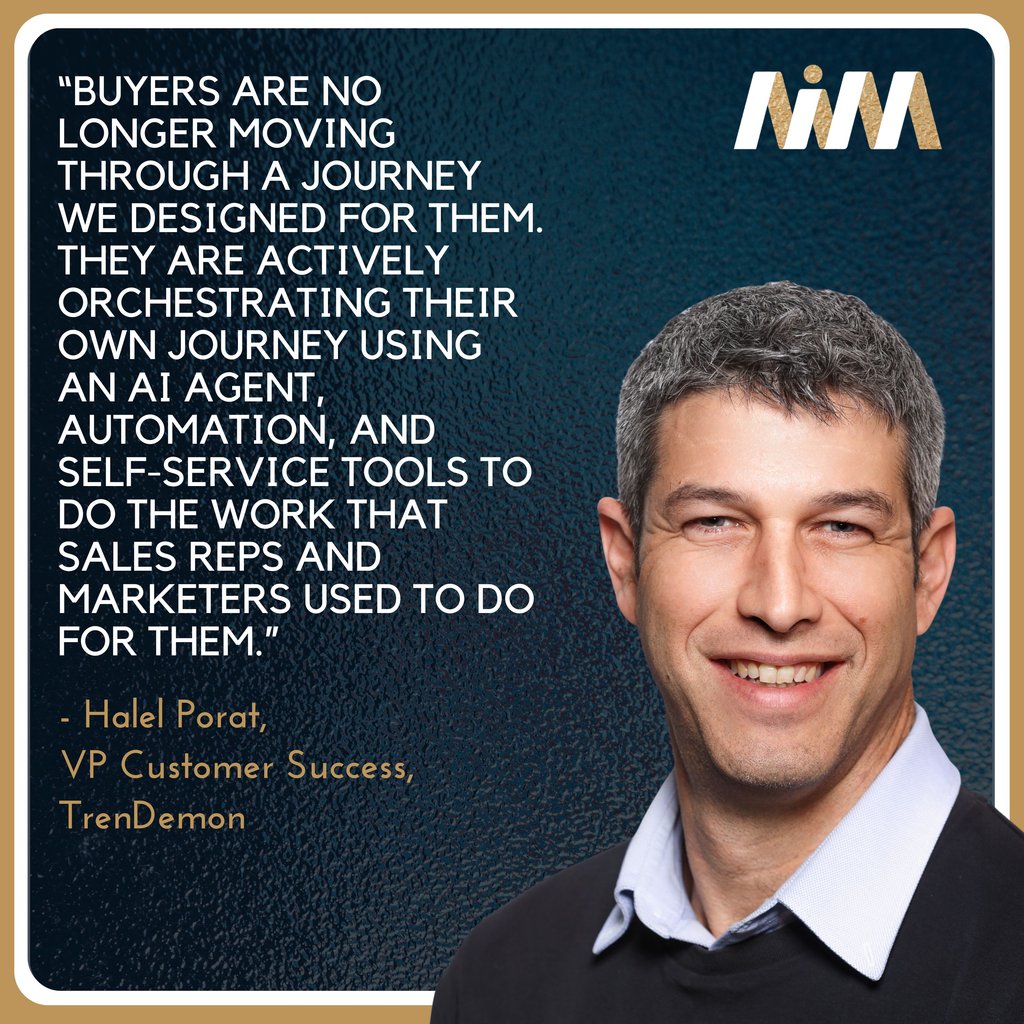
Halel uses a travel booking analogy to make it concrete. A buyer no longer browses page by page. They enter a single request and an AI simultaneously pulls comparisons, case studies, pricing signals and vendor recommendations, delivering a complete answer in seconds. Buyers no longer follow journeys designed by marketing. They are orchestrating their own research using AI agents, automation and self-service tools to do the work that sales reps and marketers used to do for them.
What is the silent journey and why does it matter for Japan?
The silent journey describes all the buyer research and evaluation that happens before a prospect ever visits your website or contacts your team. Vendors are assessed through publicly available content, case studies, documentation and third-party validation. By the time sales is contacted, the decision may already be 60% to 80% formed.
Halel argues this dynamic maps closely onto how Japanese buyers have always operated. Japanese buyers traditionally conduct extensive internal alignment before engaging vendors. Risk reduction, consensus building and reputation matter more than speed. The real buying work has always happened before the sales call. The agentic shift has not changed Japanese buyer behaviour so much as it has accelerated and scaled it.
What are B2B marketers underestimating and what should they do about it?
The most underestimated asset in the agentic era is content. Every asset a company publishes becomes the source material that AI systems draw from when buyers ask questions outside the website. Thin, inaccurate or product-only content will cost a brand its place on the shortlist before the sales conversation ever begins.
Halel draws a direct line between content quality and discoverability. When a buyer asks ChatGPT to compare vendors, the answer is pulled from somewhere. That source is your published data. B2B teams that spent years chasing volume by producing 18 blog posts a month now need to shift focus toward precision, accuracy and answering the real questions buyers are asking.
Signs that a content strategy is misaligned with the agentic buyer:
- Website content is product-focused and company-focused rather than buyer-question-focused, meaning AI systems cannot surface it as a useful answer to comparison or evaluation queries
- Published assets are high in volume but low in precision, generating inaccurate AI-generated answers that damage trust before a buyer ever reaches you
- The website functions as a brochure rather than an answer engine, failing to serve mature buyers who arrive already 80% through their decision and need specific answers fast
How do answer engines on your website unlock real buyer intent signals?
When a late-stage buyer arrives on your website, they do not need a homepage tour. They need one of two things: a fast path to a conversation with a salesperson, or an intelligent agent that can answer their specific questions precisely and immediately.
Halel explains that an open text question from a buyer is itself a high-intent signal, regardless of the answer they receive. A company-fit visitor who asks a question has demonstrated intent that exceeds any page visit. Those questions also reveal exactly what the buyer is evaluating, what pain they are trying to solve and where content gaps exist.
For sales teams in Japan, where context and timing define the quality of a follow-up call, knowing the exact question a buyer asked before picking up the phone changes everything. It replaces generic discovery with informed, buyer-specific conversation from the very first interaction.
What is generative engine optimization and how does it sit alongside SEO?
Generative engine optimization (GEO), does not replace search engine optimization (SEO). It reframes it. Marketers are no longer optimizing only for search engines but for generative decision makers: AI systems that summarize, compare and recommend. Data from Trendemon across more than 200 major B2B websites shows approximately a 15% decrease in SEO-driven traffic over the past year, with that trend expected to continue through 2026.
Halel’s recommended starting approach is audit first, correct second, optimize continuously:
- Audit what AI currently understands about your company by asking a model to explain your product in three sentences and checking whether the answer matches your positioning
- Identify and correct the content gaps that are producing inaccurate or incomplete AI-generated descriptions of what you do
- Treat GEO as an ongoing feedback loop rather than a one-time fix, because AI systems will continue to evolve how they summarize and recommend your brand
FAQ
It means buyers are no longer following the journey that marketing designed. They are using AI agents, automation and self-service tools to conduct research, run comparisons and form shortlists independently, before they ever visit your website or engage with your sales team.
Every asset you publish becomes the source material AI systems draw from when buyers ask questions outside your website. Inaccurate, thin or outdated content will produce inaccurate AI answers, costing you a position on the shortlist before any conversation begins.
A chatbot is designed to route visitors to a salesperson as quickly as possible. An answer engine scans and indexes the full content of a website so it can provide buyers with precise, grounded answers to their actual questions. The goal is to replicate the AI-driven experience buyers already have outside your website, on your website.
GEO does not replace SEO. It adds a new layer of visibility. Where SEO optimizes for search engine rankings, GEO optimizes for how AI systems understand, summarize and recommend your brand to buyers who are using generative tools to make decisions. Both matter and both require ongoing attention.
Listen to the full episode
To hear all of Halel’s insights on the agentic buyer journey, content strategy and GEO, listen to the full episode of the Asia AIM Podcast with host Robert Heldt.