- Podcast
・ March 18, 2026
Episode 9 – Beyond Marketing: Why Your Brand Should Run the Business with Andreas Moellmann
Most leadership teams treat brand as a cost: a line item for logos and campaigns. But the brands that win in APAC think about it very differently.
“Branding is often very output-focused. It is a wrapper around the product or the service. It is not an integral part of it. It’s not inside the product, nor is it connected to the product itself. However, it builds itself around it.”
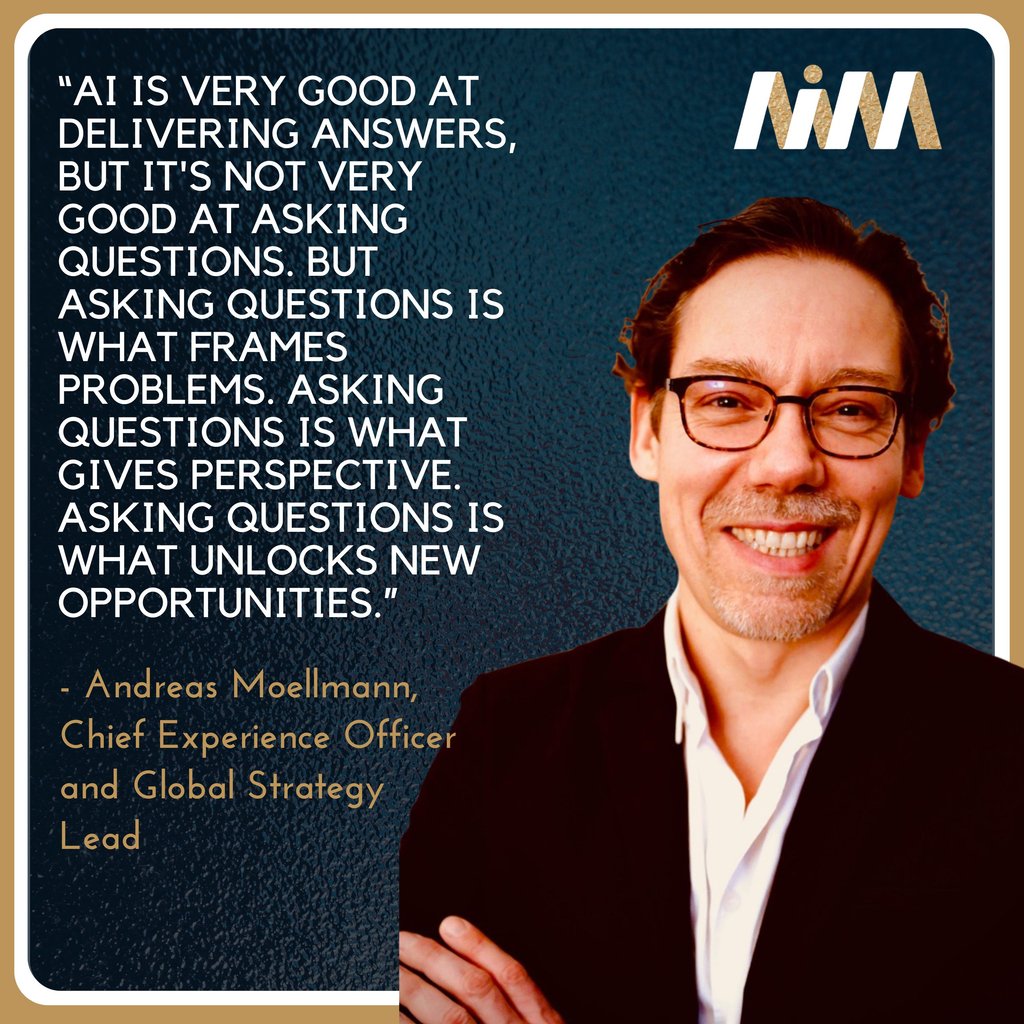
— Andreas Moellmann, Chief Experience Officer and Global Strategy Lead
In Episode 9 of the Asia AIM Podcast, host Robert Heldt speaks with Andreas Moellmann, a global brand strategist with more than 30 years of experience across Berlin, Tokyo and beyond. Andreas makes the case for treating brand not as a visual identity, but as a decision-making framework that aligns teams, accelerates execution and drives measurable business outcomes.
What is a brand operating system and why does it matter?
A brand is not a logo. It is not a tagline. At its most powerful, brand is a framework for decision-making that tells every employee, at every level, how to act without waiting for instructions from the top.
Andreas describes this as a brand operating system: an internal structure that creates organizational coherence and faster execution. When brand purpose is embedded in the product and the culture, not just the advertising, it enables people across departments to make aligned choices independently. Patagonia making the Earth a shareholder or AXA enabling domestic violence insurance claims, are examples of purpose expressed through action, not messaging.
Why do leadership teams misunderstand brands and how do you fix it?
For many leadership teams, the brand is a cost center. Marketing struggles to prove its value because it reports on vanity metrics such as impressions, reach and awareness scores that do not connect to business outcomes.
Andreas argues the problem is a measurement failure. Effective brand systems measure cumulative, long-term value through journey optimization, revealing cause and effect rather than reporting isolated numbers. When marketing is connected to business transformation rather than linear performance metrics, its value becomes impossible to ignore.
Signs that a business lacks a clear brand strategy include:
- Organizational silos where teams optimise independently rather than collectively, creating disconnected customer journeys that generate friction across every touchpoint
- Leadership following the competition rather than leading the market
- Measurement systems that report isolated numbers instead of revealing the cause-and-effect relationships across the full customer journey
What does brand transformation look like in APAC?
APAC is not a single market. Japan, China, Southeast Asia and Australia each carry distinct cultural dynamics, founder relationships and consumer expectations. Global brands that enter with a rigid, headquarters-driven playbook almost always stumble.
Andreas highlights two APAC-specific challenges that global brands consistently underestimate:
- Founder-led decision making, where brand authority is personal and not easily delegated to outside consultants or global systems
- Cultural nuance that demands local adaptation at the strategy level, not just the creative execution level
The brands that succeed in APAC treat local teams as strategic partners, not regional executives. They build brand systems flexible enough to hold their values while adapting to the market they are actually in.
FAQ
A brand operating system is an internal decision-making framework that empowers employees across departments to make aligned choices without relying on individual judgment. It creates organizational coherence and accelerates execution by embedding brand purpose into how a business actually operates.
The most common failure is imposing a rigid global playbook without respecting the cultural nuance of individual APAC markets. Japan, China and Southeast Asia each require local adaptation at the strategy level. Underestimating founder-led dynamics and limiting the authority of local teams are the two most costly mistakes.
AI accelerates marketing execution but it cannot replace human judgment. The strategists who thrive will be those who use AI for productivity while doubling down on the ability to read context, navigate cultural nuance and make decisions no algorithm can replicate.
Listen to the full episode
To hear all of Andreas’s insights on brand strategy and APAC market entry, listen to the full episode of the Asia AIM Podcast with host Robert Heldt.